

For cat owners, choosing the right cat litter is directly related to daily cleaning efficiency and indoor air quality. Many cat owners face problems such as poor clumping, difficulty in scooping, bad odors, and even cats refusing to use the litter box. This article will start with the key performance indicators of cat litter and give a clear overview of the main types of cat litter in 2026 and their best use cases. It will serve as a useful reference for buying pet supplies.
Core evaluation dimensions for choosing cat litter
When evaluating cat litter products, we recommend focusing on four key indicators: odor control, clumping speed, dust content, and product safety. Once you understand these standards, you can easily tell the quality of most cat litters on the market.
Main types of cat litter in 2026 and their features
Here is a simple comparison of the main types:
| Cat Litter Type | Key Advantages | Main Disadvantages | Best For |
| Bentonite Clay Litter | Feels like natural sand, so cats accept it well; clumps firmly; best odor control | High dust content; cannot be flushed; may track out of the box | Multi-cat households, budget-conscious owners, cats picky about paw feel |
| Tofu Litter | Made from plant materials; low dust, good for respiratory health; small amounts can be flushed; soft texture | Clumps are not as firm; may get moldy in humid weather; shorter shelf life; higher price | Small apartments, renters, people who care about easy waste disposal |
| Mixed Litter | Combines clay and tofu; balanced performance in clumping, dust control, and odor control; contains antibacterial granules | Higher price than single-type litters; contains clay so cannot be flushed | New cat owners – a safe first choice with high tolerance for mistakes |
| Cassava Litter | Almost no dust; biodegradable and flushable; very safe | Expands when wet, so needs a larger litter box; relatively expensive | Kittens, flat-faced cats, cats with sensitive respiratory systems |
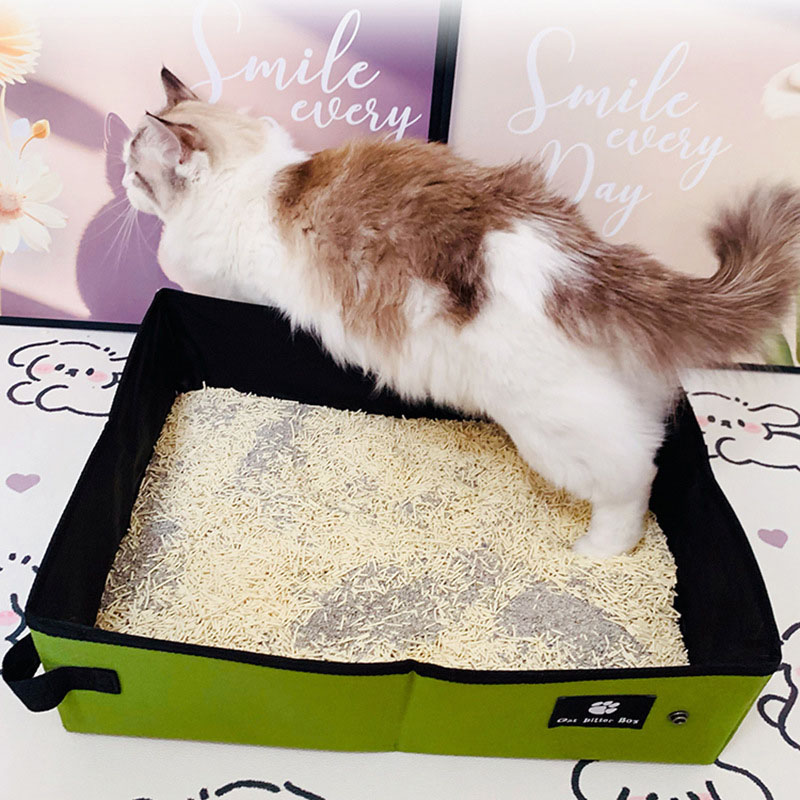
Key indicators for choosing cat litter
The two most important factors are odor control and clumping performance.
Many buyers choose scented litters (like lavender or milk fragrance) hoping to cover up bad smells. However, mixing perfume with urine odor often creates an even worse smell. Effective odor control should be based on physical absorption (such as porous clay trapping odor molecules) or molecular breakdown (using enzymes or activated carbon to break down ammonia). If a product only talks about its nice smell but does not explain how it controls odor, you should be careful.
Clumping speed is also important. The faster the clump forms, the less likely urine will leak to the bottom of the box and stick. A good product should form a clump in less than 8 seconds. The clump should be firm enough that it does not break apart when you scoop it.
If you need a custom design or specific litter products, please feel free to contact us. We will be happy to provide you with the best solution.
Please Read On, Stay Posted, Subscribe, And We Welcome You To Tell Us What You Think.
 Subscribe

HAVE A QUESTION?
+8618019989450


Copyright © 2026 Hefei Bolo Pet Products CO., LTD. All Rights Reserved.  Network Supported


Leave A Message
Scan to Wechat :

Scan to WhatsApp :

Hi! Click one of our members below to chat on
 English
  Français
 Pусский
 Español
 العربية